

Adhesives play a critical role in patient care—but how they are applied, maintained, and removed can significantly impact skin integrity, patient experience, and infection risk. This 3-part Wednesday Workshop series introduces a Responsible Adherence approach, emphasizing the importance of protecting skin, standardizing safe removal practices, and assessing outcomes to drive meaningful improvement. Each session delivers practical, evidence-informed insights clinicians can immediately apply.
Educational Webinars
Upcoming Webinars
Three-Part Series: Responsible Adherence for Reducing Infection Risk

Session 1: Skin Integrity
This session explores how compromised skin contributes to dressing disruption, device instability, and increased risk, while highlighting strategies to identify and protect at-risk patients, including thoughtful site selection and proper maintenance.
- Identifying patients at risk for skin compromise
- Impact of site selection on skin integrity
- Maintenance practices that support skin health
Wednesday, October 21, 2026 | 2:00pm ET | Length: 30 Minutes
Session 2: Removal as a Procedure
While dressing and device removal are common elements of patient care, approaches can vary. This session reframes removal as a procedure, focusing on techniques to reduce trauma, minimize skin damage, and improve consistency in care.
- Reframing removal as a standardized clinical procedure
- Techniques to reduce force, friction, and skin trauma
- Role of adhesive removers in supporting safe, consistent practice
Wednesday, October 28, 2026 | 2:00pm ET | Length: 30 Minutes
Session 3: Assessing Outcomes
Improvement starts with measurement. This session introduces a structured approach to evaluating skin condition to support early identification of MARSI risk factors and highlight opportunities for improvement through a Point Prevalence Assessment.
- Key indicators: skin condition, dressing integrity, and moisture presence
- Identifying trends and gaps in current practice
- Using point prevalence insights to drive improvement
Wednesday, November 4, 2026 | 2:00pm ET | Length: 30 Minutes
Recorded Webinars
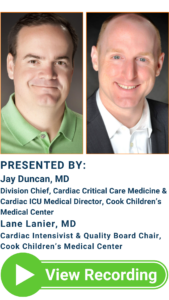
Novel Securement of Catheters in Pediatric and Neonatal Critical Care Medicine
Join Pediatric Critical Care experts Jay Duncan, MD and Lane Lanier, MD from Cook Children’s Medical Center in Ft. Worth, TX, as they share real-world experience using SecurAcath in approved, yet innovative, applications beyond traditional PICC securement. Through a series of procedural videos and clinical case discussions, presenters will demonstrate the securement of central venous catheter and pleural drains, while exploring the clinical rational for selecting SecurAcath over sutures or adhesive methods, the impact on patient outcomes and clinical workflow. The discussion will include practical considerations for implementing these techniques in pediatric and neonatal critical care setting.
This webinar is free to everyone!
Original Air Date: Wednesday, September 9th, 2026 3:00 PM ET
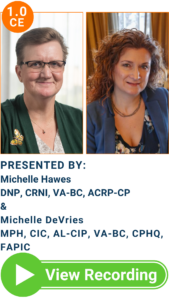
Dressing for Success: Translating Post-Insertion VAD Guidelines into Daily Practice
This webinar begins with an overview of Section 5 of the Association for Vascular Access (AVA) Clinical Practice Guidelines before exploring how to translate evidence into everyday vascular access practice. The presentation will examine practical strategies for postinsertion vascular access device (VAD) care, including dressing integrity, securement, skin protection, complication recognition, and device stewardship. Attendees will learn how consistent assessment, reliable maintenance practices, and focused quality improvement measures can help reduce complications and improve patient outcomes.
LEARNING OBJECTIVES
1. Describe how post-insertion VAD assessment supports infection prevention, complication reduction, and device stewardship.
2. Identify key elements of routine VAD monitoring: dressing integrity, securement, skin condition, and catheter function.
3. Apply guideline-based strategies to improve dressing integrity and reduce preventable dressing disruption.
4. Select practical QI measures for monitoring vascular access maintenance reliability.
This webinar is free to everyone!
The Association for Vascular Access is an accredited continuing education provider through the California Board of Registered Nurses. Provider #: CEP12371.
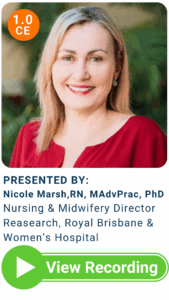
The STICKY Solution: Preventing Dressing Disruption in Central Line Care
Central venous access devices (CVADs), particularly those inserted in the internal jugular vein, are highly susceptible to complications and failure resulting from inadequate dressing integrity and securement. These largely preventable issues can lead to painful reinsertions, interruptions in essential therapy, and increased healthcare costs. Enhancing dressing adhesion to the skin offers the potential to reduce device failure and improve patient outcomes. Nicole Marsh RN, MAdvPrac, PhD will present the findings of a randomized controlled trial conducted across 4 intensive care units comparing three approaches: a standard dressing alone, a standard dressing supplemented with a liquid adhesive, and their respective effects on CVAD dressing adherence, complication rates, and overall device failure.
LEARNING OBJECTIVES
1. Describe the impact of dressing and securement on CVAD complications and failure
2. Understand the rationale for applying medical liquid adhesive to CVAD dressings
3. Explain the key findings of a trial using liquid adhesive to secure CVAD dressings
4. Understand the potential cost saving associated with the use of medical liquid adhesive
This webinar is free to everyone!
The Association for Vascular Access is an accredited continuing education provider through the California Board of Registered Nurses. Provider #: CEP12371.


Turning Skeptics into Supporters: Engaging Teams in Product Change
This presentation outlines strategies for introducing new vascular access products in clinical settings. It covers foundational principles for defining and measuring problems, mapping stakeholders, and gaining multi-role buy-in. Real-world examples and best practices are provided to illustrate the implementation and adoption of new products, with a focus on sustaining change through continuous education and celebrating wins.
LEARNING OBJECTIVES
1. Understand the foundational principles for defining and measuring problems, mapping stakeholders, and identifying affected parties
2. Learn strategies for building multi-role buy-in and overcoming standardization barriers in clinical settings
3. Gain insights into the importance of ongoing education and the diffusion of innovations to sustain change
4. Explore real-world examples and best practices for implementing and adopting new vascular access products
This webinar is free to everyone!
The Association for Vascular Access is an accredited continuing education provider through the California Board of Registered Nurses. Provider #: CEP12371.
Hospital Onset Bacteremia & Fungemia (HOB): A New Hospital Onset Infection Metric
View this enlightening webinar which explores the potential inclusion of Hospital Onset Bacteremia (HOB) as a new quality metric by the Centers for Medicare and Medicaid Services (CMS). This session provides an in-depth look at HOB, its sources, strategies for prevention, and its broader implications in healthcare. Participants will gain insight into the prevalence and impact of HOB on patient outcomes and how various hospital roles, including physicians, nurses, infection control specialists, and administrators, can collaborate to effectively address this issue.
LEARNING OBJECTIVES
1. Understand the definition of HOB
2. Describe the prevention measures of HOB
3. Identify the upcoming surveillance protocols for HOB
4. Identify how the various healthcare associated infections contribute to HOB
This webinar is free to everyone!
The Association for Vascular Access is an accredited continuing education provider through the California Board of Registered Nurses. Provider #: CEP12371.
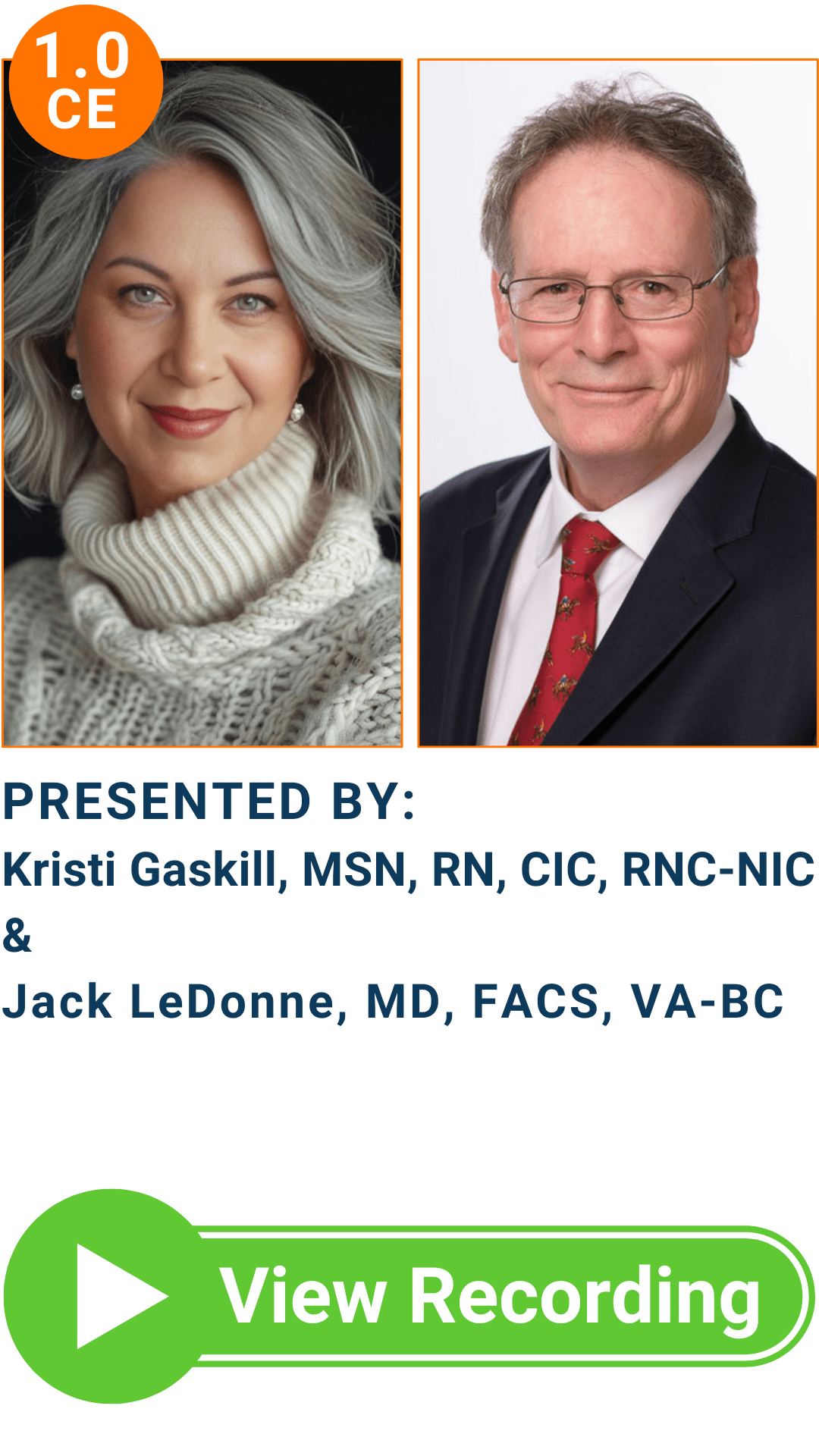
From Disruption to Prevention: Improving Dressing Integrity and Reducing CLABSI Risk
Watch this compelling presentation by a distinguished RN-Infection Preventionist and an experienced MD as they guide you through the intricacies of Central Vascular Access Devices (CVADs). This informative session will cover everything from the delicate relationship between the insertion and ongoing care of these devices to practical insights on maintaining dressing integrity and the critical role of permanent securement devices. Attendees will gain a thorough understanding of CVAD management, appreciate the implications of dressing disruptions, and learn valuable techniques to prevent such issues, ultimately ensuring optimal patient outcomes.
LEARNING OBJECTIVES
1. The attendees will understand the relationship between the Insertion of a Central Vascular Access Device and the Care and Maintenance of the device.
2. The audience will appreciate the importance of a disrupted dressing and the techniques to prevent disruption.
3. The attendees will understand the importance of a permanent securement device.
This webinar is free to everyone!
The Association for Vascular Access is an accredited continuing education provider through the California Board of Registered Nurses. Provider #: CEP12371.
Original Air Date: Tuesday, February 4, 2025 1:00 PM ET

Hospital Onset Bacteremia: Building On What Works
Learning Objectives:
- Review current understanding of hospital onset bacteremia (HOB) surveillance
- Describe the literature regarding HOB sources and prevention
- Discuss current guidelines and standards regarding prevention of intravascular access related infections
- Review updated 2024 INS Guidelines
This webinar is free to everyone!
Sponsored by Ethicon Biopatch and Eloquest Healthcare
Original Air Date: Tuesday, May 7, 2024 1:00 PM EST
CVAD nuances and special considerations in the neonatal and pediatric population
Care of pediatric and neonatal patients with CVADs demands that the team managing their care have the knowledge, training and skills to address this population’s unique needs. In this 1.0 CE webinar, Cheryl Gillette, RN, VA-BC, CNPI, Pediatric Vascular Access Coordinator at Golisano Children’s Hospital – University of Rochester Medical Center, will share her and her team’s experiences and best practices related to their care delivery model, characteristics of a successful Ped/Neo vascular access RN, as well as workflow best practices and technology that is acknowledged by the team as contributing to positive patient outcomes.
This recorded webinar is free to everyone!
The Association for Vascular Access is approved by the California Board of Registered Nursing as a continuing education provider. Number CEP12371 for 1.0 contact hours.
Original Air Date: March 28, 2024

Beyond Acute Care: Vascular Access in Alternate Environs
This presentation describes the beginning of a Mobile Vascular Access service, the procedures performed and the morph into a Mobile Health Care company. The differences encountered in adjusting from experience in Acute Care Hospitals to the radically different environment in Skilled Nursing Facilities is described. The experiences of administration, nursing and physician is described.
LEARNING OBJECTIVES:
1. Appreciate what is involved in starting a Mobile Vascular Access service
2. Appreciate the differences between an Acute Care Hospital and SNF
3. Understand the evolution from a Vascular Access provider to a Mobile Health Care concern
The Association for Vascular Access is approved by the California Board of Registered Nursing as a continuing education provider. Number CEP12371 for 1.0 contact hours.
Original Air Date: December 20, 2023 2:00pm EST
Finding Zero: One Vascular Access Team's Journey to Improve Patient Care
A dedicated Vascular Access Team can relieve some of the burden of bedside staff with care, maintenance, surveillance, and education regarding vascular access devices. This specialty team can also provide consultative services to provide the most current evidence-based practice to the patients they are trusted to care for.
Hear the story of one Vascular Access Team in Indiana that has achieved and maintained zero CRBSIs in the PICCs and Midlines they placed since June of 2017 and has been instrumental in reducing CRBSI in all central venous catheters (CVC) in their institution. This team has also expanded its scope of practice to place PICC lines in the neonatal population, reducing delays in care for their most vulnerable population, and placing CVCs in adult patients.
LEARNING OBJECTIVES
1. Share one team’s 14-year journey of providing vascular access care in an acute setting.
2. Demonstrate how data can be leveraged to expand a team.
3. Describe examples of using adversity to bring about positive change.
4. Share custom tools and public resources to improve your practice.
Original Air Date: July 26, 2023 Length: 60 Minutes
Growing a Vascular Access Specialty Team (VAST): One Step at a Time
STEP 1 – Financial Justification
Growing a Vascular Access Specialty Team (VAST) can provide numerous benefits to healthcare organizations, including improved patient outcomes and staff satisfaction. These quick, 20-minute presentations will help you justify and implement a VAST, with actionable tips and resources to take back to your facility.
Workshop Overview
In order to gain approval to implement a VAST, it is essential to demonstrate its financial value to your organization. This session reviewed key areas to show value, understand the financial implications of wasted resources and help you calculate the costs with and without a VAST.
Original Air Date: June 14, 2023 Length: 35 Minutes
Growing a Vascular Access Specialty Team (VAST): One Step at a Time
STEP 2 – Planning & Implementation
Workshop Overview
Once you have approval to create a VAST in your facility, it can feel overwhelming knowing where to begin. Lee will share his experience and best practices to help you find solutions to eliminate waste and stay on budget, determine your team size and keep everyone in sync.
Original Air Date: June 21, 2023. Length: 30 Minutes
Growing a Vascular Access Specialty Team (VAST): One Step at a Time
STEP 3 – Ongoing Evaluation
Workshop Overview
The goal is not just to implement a VAST but to continue to evolve with your facility’s changing needs so you can provide long-term value and quality care for your patients. We discuss common areas of improvement and options for additional ways you can show the value of a VAST.
Original Air Date: June 28, 2023. Length: 35 Minutes
Show Me the Money! Reimbursement Tactics & Monetizing Your Worth
By reviewing this webinar, you will gain essential insights into maximizing revenue generation in your department. We will also explore the variations in hospital revenue and equip you with the knowledge to monetize quality improvement project outcomes.
Learning Objectives:
- Describe the variations in hospital revenue
- Compare the calculated procedural expense to actual revenue
- Monetize quality improvement project outcomes
Event Date: April 5, 2023. Length: 60 Minutes
Are You Secure... With Your Securement?
This presentation will review all aspects of securement from dressing to vascular access device and drill down to review pro/cons of each method. We will also review best practice guidelines and see what they say and help direct changes in our present practice. We will reinforce the need for data collection to advance the specialty of vascular access.
Learning Objectives:
- The viewer will have an understanding of different device securement methods.
- The viewer will become familiar with device securement advantages and limitations.
- The viewer will have an understanding of the current best practices regarding vascular access device securement and dressing integrity.
- The viewer will have an understanding of the role device and dressing securement plays in advancing healthcare outcomes.
Event Date: October 25, 2022. Length: 60 Minutes
Becoming a Vascular Access Expert: the KSAs of the Job
This presentation looks at the knowledge, skills, and abilities to move beyond being a vascular access specialist to become an expert. Being a recognized expert in your facility establishes the VAS to expand practice and improve care. The knowledge, skills and abilities of the expert exceed the basics of being a specialist and enable one to advance their practice.
Learning Objectives include:
Identify the knowledge, skills and abilities of the vascular access expert
Differentiate a vascular access specialist from a vascular access expert
Assess your own professional development and identify areas for growth
Discuss the ways in which expertise impacts patient care
Event Date: August 10, 2022. Length: 60 Minutes
Stop Struggling with Vascular Access Device Outcomes
Session 3: Mastering Maintenance
Vascular Access is the most prevalent invasive medical procedure. It can have serious, even fatal consequences. Improving practice and patient outcomes is possible. These quick, 20-minute presentations will give you evidence-based actionable tips and resources to take back to your facility.
The goal of VAD care and maintenance is to reduce the risk of complications and preserve the device function for the duration of therapy. Catheter site care recommendations, include dressing changes and flushing practices will be discussed.
Event Date: May 25, 2022 Length: 30 Minutes
Stop Struggling with Vascular Access Device Outcomes
Session 2: Superior Securement
Vascular Access is the most prevalent invasive medical procedure. It can have serious, even fatal consequences. Improving practice and patient outcomes is possible. These quick, 20-minute presentations will give you evidence-based actionable tips and resources to take back to your facility.
Device dislodgements are unacceptably high. If you are not sufficiently paying attention to three points of securement – at the site, the dressing, and the tubing – the device is not sufficiently secure.
Original Air Date: May 11, 2022 Length: 30 Minutes
Stop Struggling with Vascular Access Device Outcomes
Session 1: Ideal Insertion
Vascular Access is the most prevalent invasive medical procedure. It can have serious, even fatal consequences. Improving practice and patient outcomes is possible. These quick, 20-minute presentations will give you evidence-based actionable tips and resources to take back to your facility.
Site selection, vein selection, device selection… oh my! We will review key VAD insertion considerations to ensure secure and reliable venous access.
Original Air Date: April 27, 2022 Length: 30 Minutes

Quality Improvements in Vascular Access: Is the Dressing Just a “Dressing?
This presentation is aimed at illustrating the relationship of dressing care and maintenance and vascular access device insertion. The proper placement of a device and subsequently the dressing plays an integral role with dressing adherence. Utilizing the evidence-based practice and available tools, dressings are capable being maintained with better clinical outcomes.
Original air date: March 30, 2022 Length: 1 Hour
Putting the Standards into Practice...and Not Stopping There!
This webinar reviews some key aspects of the 2021 Infusion Therapy Standards of Practices and discusses the progression of a quality improvement project from concept to conference presentation to manuscript to citation in the standards and is a call to action for clinicians to share that work to help make a change in practice.
Original Air Date: January 11, 2022 Length: 1 Hour
Vascular Access Jamboree: A 'How to Guide'
Step 3 – Post-Implementation Monitoring
One large, urban community hospital has been successful in bringing together unit-based staff, nursing leadership, nursing professional development, clinical nurse specialists, infection prevention, as well as industry partners – the Jamboree team – all with the shared goal of improving vascular access outcomes through routine monthly rounding. This series will break this process down into 3 short presentations with actionable take-aways.
Step 3 – ‘One and done’ is not a pathway to lasting change.This presentation will discuss why routine monitoring is important to ensure sustained results. Strategies on how to complete this efficiently will be discussed.
Live Air Date: Wednesday, August 11, 2021 Length: 30 Minutes
Vascular Access Jamboree: A 'How to Guide'
Step 2 – Collecting Data & Implementing Change
One large, urban community hospital has been successful in bringing together unit-based staff, nursing leadership, nursing professional development, clinical nurse specialists, infection prevention, as well as industry partners – the Jamboree team – all with the shared goal of improving vascular access outcomes through routine monthly rounding. This series will break this process down into 3 short presentations with actionable take-aways.
Step 2 – Routine observation will highlight trends and uncover issues. However, often such issues are at the intersection of several different products. What then? An example of a pilot trial and successful intervention will be discussed.
Original Air Date: July 28, 2021 Length: 30 Minutes
Vascular Access Jamboree: A 'How to Guide'
Step 1 – Where to Start?
Nearly all hospitalized patients can expect to receive an IV catheter during their hospital stay. It has been well-documented that IV failures and complications remain unacceptably high. Observation through bedside rounding is an effective strategy to highlight issues that improve patient outcomes and reduce costs.
One large, urban community hospital has been successful in bringing together unit-based staff, nursing leadership, nursing professional development, clinical nurse specialists, infection prevention, as well as industry partners – the Jamboree team – all with the shared goal of improving vascular access outcomes through routine monthly rounding. This series will break this process down into 3 short presentations with actionable take-aways.
Step 1- Getting started is the hardest part! Establishing clear goals and objectives, roles to invite, tools, resources, scheduling considerations and more will be addressed in this brief presentation.
Original Air Date: July 14, 2021 Length: 30 Minutes
The VAST Difference: Growing a Vascular Access Specialty Team (VAST) Using Data That Demonstrates Reduction in Waste & Variability
The Vascular Access Specialty Team (VAST) at Hartford Hospital has and continues to expand its services resulting in less waste, variability and better patient outcomes. In 2019, Lee and his team completed a study that integrated best in class medical devices with evidenced-based practice with each PIVC insertion. Results of this study will be discussed along with other initiatives this VAST is doing to assure they produce value that is palpable to the hospital and their patients.
Original Air Date: April 15, 2021 Length: 1 Hour
Let's Stick Together: Addressing the Dressing
Catheter Related Bloodstream Infections (CRBSI) are a significant cause of hospital morbidity and mortality. A review of literature and Infusion Therapy Standards indicate that dressing changes due to disruption are associated with a significant risk of bloodstream infection. A quality improvement project to decrease the number of premature dressing changes due to disruption was initiated and its results, including 18-months of audit data, will be discussed.
Original Air Date: Mar 10, 2021 Length: 1 Hour
Pitfalls of Catheter Securement: The Dressing (Part Two)
The prevention of vascular access device and infusion complications is enhanced through better securement and stabilization of the catheter. This presentation will identify 21 securement and dressing scenarios with measured pull forces to help clinicians understand different securement modalities. Find out how dressings make a difference. The standard of seven-day dressing changes can lead the clinician to believe that the dressing actually stays on seven days; however, dressing disruptions occur between 40-68 hours and unscheduled dressing changes contribute to increased infections, dislodgement, phlebitis, infiltration and adds extra supplies and nursing time to an already stressed environment. Keeping the dressing on is of the utmost importance. We will review the newly released standards of practices on securement with an in-depth review of a dressing enhancement to support dressing adherence.
Original Air Date: Feb 24, 2021 Length: 1 Hour